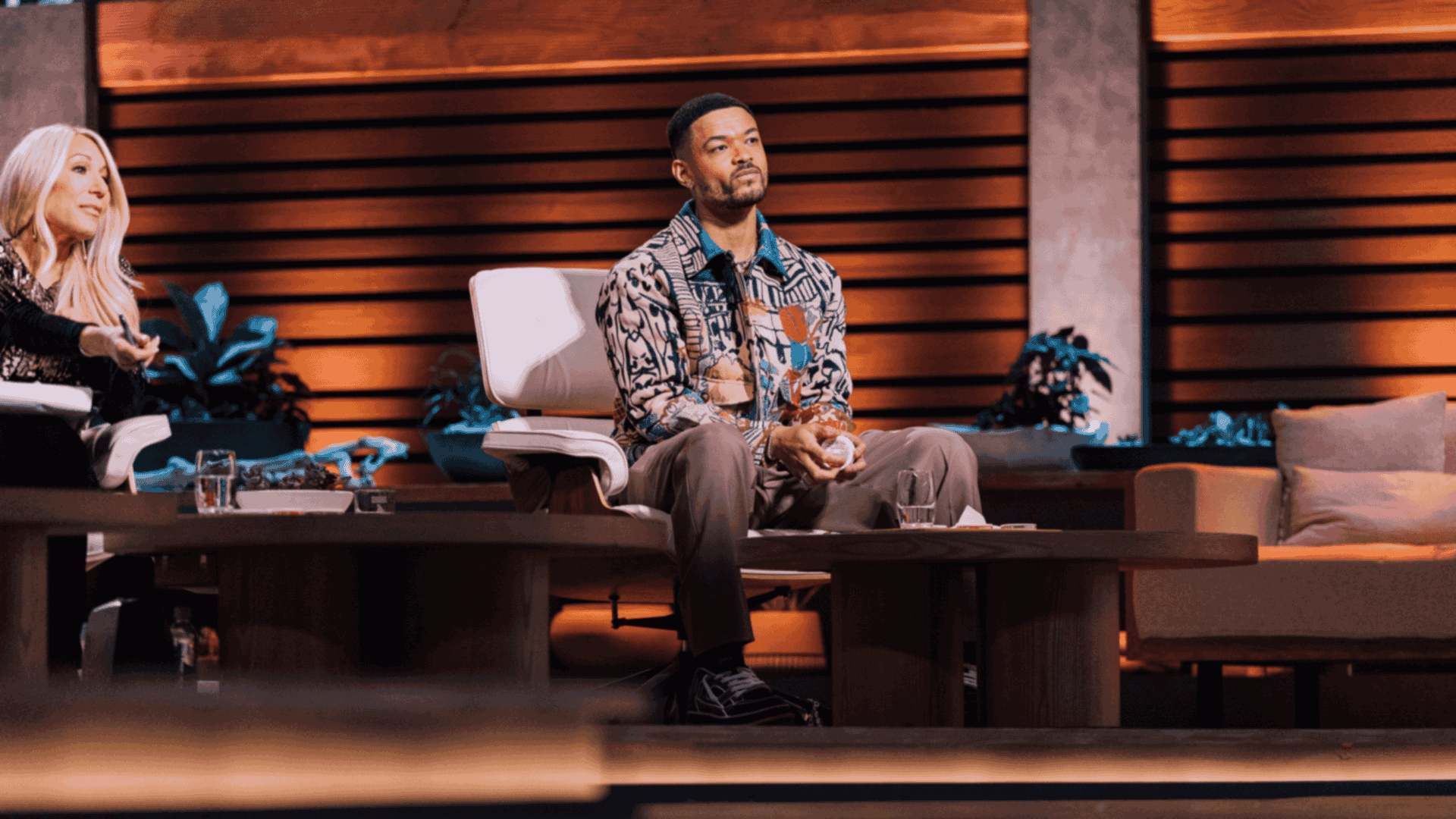
“We’re watching, in slow motion but also very quickly, the unbundling of institutions,” The Diary of A CEO’s Steven Bartlett told the audience at the Forbes Creator Upfronts this week. “When media attention shifts from, say, the old institutions of the past, to people just like you in your bedrooms with microphones, everything changes.”
He’s speaking about the boom of the creator economy, and his role within it. What started in 2017 as a podcast interviewing people from his flat in London perfectly exemplifies that change: It’s now an attention-grabbing, conversation-starting, thought-shaping show that’s attracted over a billion streams for his four hour-long episodes on everything from life as a CIA agent to the gut microbiome. He’s hit the top of podcast charts (currently at No. 2 on the U.S. business list), and turned down $100 million deals to run his show his way. The bold bets have worked so far: The franchise earned $20 million in revenue in 2024. But neither the money, nor his business ecosystem, is stopping with The Diary of A CEO.
This week, Bartlett announced that Steven.com closed an 8-figure investment deal led by Slow Ventures and Apeiron Investment Group—valuing the company at a whopping $425 million. (And Bartlett still owns more than 90%.) Steven.com is the holding company for multiple branches of the business including media studio FlightStory (including shows like Begin Again with Davina McCall and We Need to Talk with Paul C. Brunson, along with The Diary of A CEO), podcast production and technology platform FlightCast, and the investment arm FlightFund.
The investment is indicative of the shift in capital allocation that Bartlett says also stems from the attention on the creator economy. “It’s why we’re seeing every creator is becoming a VC,” he said, adding that: “Especially in a world with AI, where the cost of producing software or content drops, the game actually becomes who’s got distribution? Who’s got an audience, who can acquire customers?”
With multiple channels of distribution at his disposal, he’s set on building the “Disney” of the creator economy. What does that mean? “I think creators come in all shapes and sizes, and all mediums and platforms, so we’re super agnostic to that,” he said. Today at FlightStory, that includes teams for newsletters, short form, longform, speaking engagements and events (Bartlett himself just finished an Asia tour in September), book publishing and products.
Though so much has changed thanks to creators, we’d be remiss not to mention AI’s impact on today’s businesses, too. But for Bartlett, it’s just another opportunity to grow.
“The biggest opportunity at the moment as a content creator is translations,” he said. “Now in a world of AI, you don’t need to hire a human dubbing team in South America or Spain to translate your content into Spanish.”
These new technologies are critical for his goal of global growth. After all, only 10% of the world is fluent in English. “The other 90% can’t get your content,” he said.
Bartlett and team are also using AI to bring animation, and even cartoons, into the mix. For instance: Taking a multi-hour episode with a guest, determining the key lesson from the conversation, and turning it into a 20-minute animated series to upload to YouTube Kids.
When asked about what will be required of creators in the future, he left us with this: “It doesn’t matter what I’m doing now in terms of tactics. It matters that you have a system or principle that will allow you to find the right answer in six months when what I say now has expired,” he said. “The answer is, I don’t know, but my team is running so many tangential experiments that we’re about to find out. We’re going to continue to stay ahead of the curve.”
Source article: